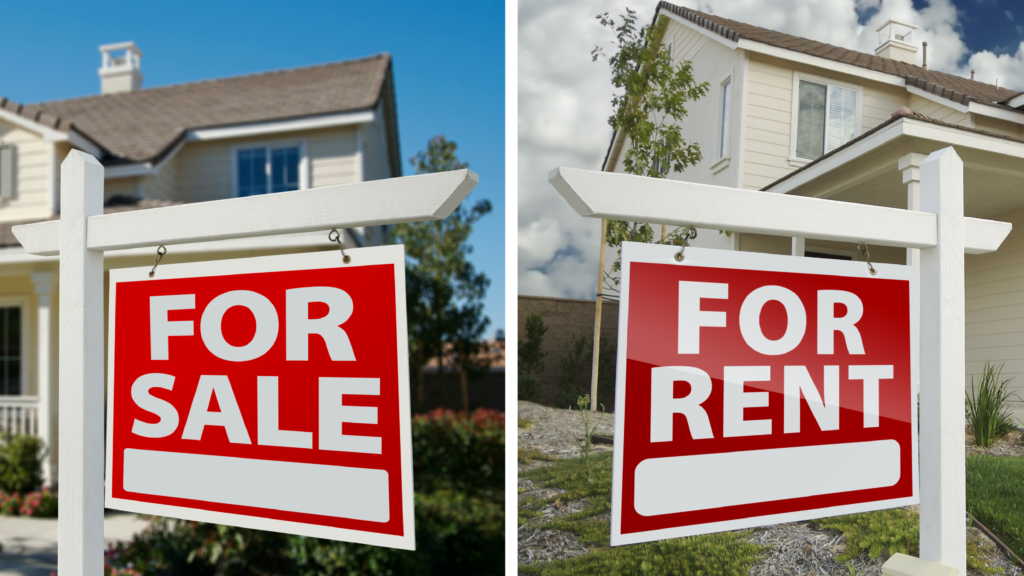
A Knoxville rental property can provide monthly income and long-term equity. It can also create repair bills, vacancy costs, tenant problems, and responsibilities that no longer fit your life.
The difficult part is knowing when a rental is still a productive investment and when you are holding it out of habit.
Before deciding whether to sell your rental property in Knoxville, TN, look beyond the monthly rent. Your actual cash flow, available equity, upcoming repairs, tenant stability, tax position, and personal plans all matter.
Quick Answer
Keep renting your Knoxville property if it generates reliable net income, has manageable repair needs, attracts dependable tenants, and supports your long-term financial goals. Consider selling if profits are shrinking, expensive repairs are approaching, tenant or vacancy problems keep returning, or your equity could serve you better elsewhere.
Start With the Property, Not the Knoxville Headlines
Knoxville still has an active rental market, but citywide numbers cannot tell you whether one particular house is worth keeping.
As of July 9, 2026, Zillow’s Knoxville rental market data showed an average asking rent of $1,850 across all property types and bedroom counts. That figure was $50 lower than the previous year. Meanwhile, Redfin’s Knoxville housing market report showed a median sale price of approximately $317,000 and an average market time of 52 days for the three months ending May 2026.
Those figures provide context, not an answer. Your rental may perform very differently based on its location, condition, tenant history, layout, and financing.
A student-oriented rental near Fort Sanders or the University of Tennessee may have different turnover and maintenance patterns from a long-term family rental in Powell or Karns. An older house in Fountain City or North Knoxville may require a different repair budget than a newer West Knoxville property.
Calculate What Your Rental Actually Earns
Many owners calculate rental profit by subtracting the mortgage payment from the rent. That leaves out several costs that can quietly eliminate the income.
Use this calculation instead:
Annual rent collected
Minus:
- Mortgage payments
- Property taxes
- Landlord insurance
- Property management
- Routine maintenance
- Vacancy and turnover
- Utilities paid by the owner
- HOA costs
- Legal or administrative expenses
- Reserves for roofs, HVAC systems, plumbing, and other major work
The amount remaining is your approximate annual cash flow.
A property collecting $1,900 per month is not necessarily profitable. If it regularly requires repairs, loses one or two months of rent during turnover, and needs a major system replaced, the actual return may be much smaller than it appears.
Knox County owners can review assessed values and estimate property taxes through the official Knox County Property Tax Calculator. The calculator is an estimate rather than an official tax bill.
Measure Your Return on Equity
Positive cash flow does not automatically make a rental worth keeping. You also need to consider how much equity is tied up in the house.
Use this basic formula:
Annual net rental income ÷ estimated net equity = return on equity
Suppose your rental produces $4,800 in annual net income and you could receive approximately $160,000 after paying the mortgage and selling costs.
Your return on equity would be about 3%.
That does not automatically mean you should sell. You may expect future appreciation, prefer owning physical real estate, or have favorable financing. However, this calculation helps you decide whether the income justifies the capital, work, and risk involved.
Look Five Years Ahead, Not Just One Month Ahead
A rental may look profitable today because no major repairs occurred this year. The better question is what the property may require over the next five years.
Review the condition and expected remaining life of:
- Roof
- HVAC system
- Water heater
- Electrical panel and wiring
- Plumbing and sewer line
- Foundation
- Crawlspace or basement
- Windows and exterior siding
- Appliances
- Septic system or well, when applicable
Crawlspace moisture, drainage problems, foundation settling, aging plumbing, and older electrical systems can significantly change the hold-or-sell calculation for older East Tennessee homes.
Before spending heavily on improvements, compare the estimated cost with the likely increase in rent or sale proceeds. You may discover that selective repairs make financial sense. You may also decide that selling the Knoxville property as-is is more practical than completing a large renovation.
Use This Knoxville Rental Property Scorecard
Give yourself one point for every statement that is true.
Reasons to Keep Renting
- The property produces consistent positive cash flow after all expenses.
- The tenant pays reliably and takes reasonable care of the home.
- No major repair is likely within the next few years.
- You have adequate cash reserves for vacancy and maintenance.
- The property does not require excessive time or stress.
- Your return on equity remains acceptable.
- The rental supports your long-term investment plan.
Reasons to Consider Selling
- The property has produced weak or negative cash flow for more than a year.
- Several major repairs are approaching at the same time.
- Vacancy, turnover, or unpaid rent repeatedly reduces your income.
- You are managing the property from another city or state.
- You no longer want the responsibilities of being a landlord.
- A substantial amount of equity is producing a low return.
- Selling would help you reduce debt, retire, relocate, or fund another priority.
A high score on one side does not make the decision for you. It shows where the financial and practical evidence is pointing.
How Tenants Affect the Decision
A responsible tenant can make a rental more attractive to another investor. A signed lease, consistent payment history, organized deposit records, and documented maintenance can help a buyer understand the property’s income.
A difficult tenant can have the opposite effect. Late payments, denied access, property damage, unresolved lease violations, or an active eviction may reduce the number of buyers willing to consider the house.
Tennessee’s Uniform Residential Landlord and Tenant Act applies in qualifying counties, including Knox County. Landlords must handle leases, access, notices, maintenance, deposits, and possession according to applicable law. The Tennessee Department of Health provides an overview of URLTA and rental housing responsibilities.
Do not pressure a tenant to leave, enter improperly, shut off services, or assume a sale cancels the tenant’s rights. Review the lease and consult a qualified Tennessee attorney when the situation is disputed or unclear.
For more focused guidance, read How to Sell a House With Tenants in Knoxville, TN.
Should You Keep Renting, List, or Sell As-Is?
| Option | May Be Best When | Main Benefit | Main Limitation |
|---|---|---|---|
| Keep renting | Cash flow is strong and repairs are manageable | Continued income and long-term ownership | Ongoing maintenance, vacancy, and management |
| List with an agent | The house is updated, accessible, and easy to show | Exposure to traditional buyers | Repairs, commissions, inspections, and financing risk |
| Sell to another landlord | The property has good tenants and documented income | Buyer may value the existing lease | Smaller buyer pool |
| Sell as-is to a cash buyer | The property needs repairs or a simpler exit is important | No renovation or traditional listing process | Offer may be below renovated retail value |
The highest offer is not always the option that leaves you with the highest net proceeds.
When comparing choices, account for commissions, seller concessions, repairs, cleaning, staging, utilities, insurance, taxes, mortgage payments, and the cost of remaining vacant while waiting for closing.
For a broader explanation of each method, read the complete guide to selling a rental property in Knoxville, TN.
A Realistic Fountain City Example
Consider a hypothetical landlord who owns a three-bedroom rental in Fountain City.
The house rents for $1,800 per month, but the mortgage, taxes, insurance, management, maintenance, and vacancy reserve consume most of that income. The property produces approximately $300 per month, or $3,600 per year, before major capital expenses.
The roof may need replacement within two years at an estimated cost of $12,000. The HVAC system is also nearing the end of its expected life.
The owner could:
- Keep the house and build a larger repair reserve
- Replace the roof, update the interior, and continue renting
- Complete improvements and list the property
- Sell to another landlord with the tenant in place
- Compare an as-is cash offer before investing more money
There is no universal answer. If the owner values long-term ownership and can comfortably fund repairs, keeping the property may work. If the landlord is relocating or wants to stop managing rentals, selling could provide more value than several additional years of modest cash flow.
This is an example scenario, not a valuation, repair quote, or description of an actual Knox Home Buyers customer.
Review the Tax Impact Before Selling
Selling a rental can involve capital gains, adjusted basis, depreciation, and other tax considerations. According to the IRS, owners must determine the adjusted basis of a property before calculating gain or loss. Depreciation allowed or allowable during ownership can also affect that calculation.
Review IRS Publication 527 and speak with a qualified CPA or tax advisor before selling. Your purchase price, improvements, depreciation history, ownership structure, suspended losses, and future investment plans can all affect the result.
This article provides general information and is not legal, tax, investment, or financial advice.
A Five-Step Decision Process
1. Review 12 Months of Real Numbers
Use rent actually collected and expenses actually paid. Do not rely only on projected rent or an ideal month.
2. Estimate the Next Five Years of Repairs
Obtain realistic contractor estimates for major work. Include vacancy or lost rent during renovations.
3. Estimate Your Net Sale Proceeds
Compare a traditional listing estimate with investor and as-is options. Deduct every likely selling and holding cost.
4. Review the Tenant and Lease
Gather the lease, payment history, security deposit records, notices, maintenance records, and property-access terms.
5. Compare the Decision With Your Personal Goals
Ask whether you still want to own this property five years from now. A mathematically profitable rental can still be the wrong asset when it no longer fits your time, risk tolerance, or priorities.
Common Mistakes Knoxville Landlords Should Avoid
Confusing Rent With Profit
Gross monthly rent does not show what the property earns after vacancy, repairs, management, and capital expenses.
Holding Only Because the Property Has Appreciated
Past appreciation does not guarantee future growth. Evaluate how the house performs now.
Renovating Before Comparing All Options
Do not assume every renovation will return more than it costs. Compare projected net proceeds before hiring contractors.
Ignoring Tenant Documentation
Missing leases, deposit records, payment histories, and notices can create uncertainty during a sale.
Focusing Only on the Sale Price
A higher listing price can produce lower net proceeds after repairs, commissions, concessions, holding costs, and delays.
Frequently Asked Questions
Q. Is it better to sell or keep a rental property in Knoxville, TN?
Keeping the property may be better if it produces consistent net income, has reliable tenants, and needs few major repairs. Selling may be more practical if profits are shrinking, maintenance costs are rising, or being a landlord no longer fits your goals.
Q. How do I know if my Knoxville rental property is still profitable?
Subtract all ownership costs from the rent you actually collect. Include the mortgage, property taxes, insurance, management fees, repairs, vacancy, utilities, legal costs, and reserves for major systems such as the roof and HVAC.
Q. Should I sell my rental property if it has negative cash flow?
Repeated negative cash flow is a strong reason to review your options. Before selling, determine whether the problem is temporary, such as a vacancy or one-time repair, or whether the property is likely to continue losing money.
Q. Can I sell a rental property with tenants in Knoxville?
Yes, a tenant-occupied rental can generally be sold. However, the lease, security deposit, property access, notices, and tenant rights must be handled correctly. Review the lease and consult a qualified Tennessee attorney if the situation is disputed or unclear.
Q. Should I repair my Knoxville rental before selling it?
Repairs may help attract traditional buyers and increase the sale price, but they do not always increase net proceeds. Compare contractor estimates, carrying costs, an agent’s projected net amount, and an as-is cash offer before making improvements.
Q. What taxes may apply when I sell a rental property?
Selling a rental may involve capital gains taxes and tax consequences related to depreciation. Your adjusted basis, improvements, ownership period, and previous deductions can affect the amount owed. Speak with a qualified CPA or tax professional before selling.
Q. Should I list my rental with a Realtor or sell it to a cash buyer?
Listing may be better for an updated, vacant property when maximizing market exposure is the priority. A cash buyer may be more suitable when the property needs repairs, has tenants, or you want to avoid showings and buyer-financing delays.
Make the Decision Based on Net Value, Not Pressure
Keeping a rental can be a smart choice when the property generates dependable income and remains manageable. Selling can be equally reasonable when the return no longer justifies the repairs, risk, capital, or stress.
The right question is not simply, “How much rent am I collecting?”
It is:
“What is this property giving me after every cost, and does that return still support the life and financial plan I want?”
If selling appears stronger than continuing to rent, Knox Home Buyers can review the property in its current condition and provide a no-obligation local cash offer. You can compare it with an agent’s estimated net proceeds, the cost of repairs, or the value of keeping the rental before making a decision.
Knox Home Buyers states that sellers can request an offer without an obligation to proceed and choose whether the direct-sale process fits their situation. Request a cash offer for your Knoxville rental property or review the company’s frequently asked questions before reaching out.